
Embrace Senior Living
Chicago, Downers Grove, Elmhurst, and Bensenville, IL
Rehabbing for Longevity: A Portfolio-Wide Transformation
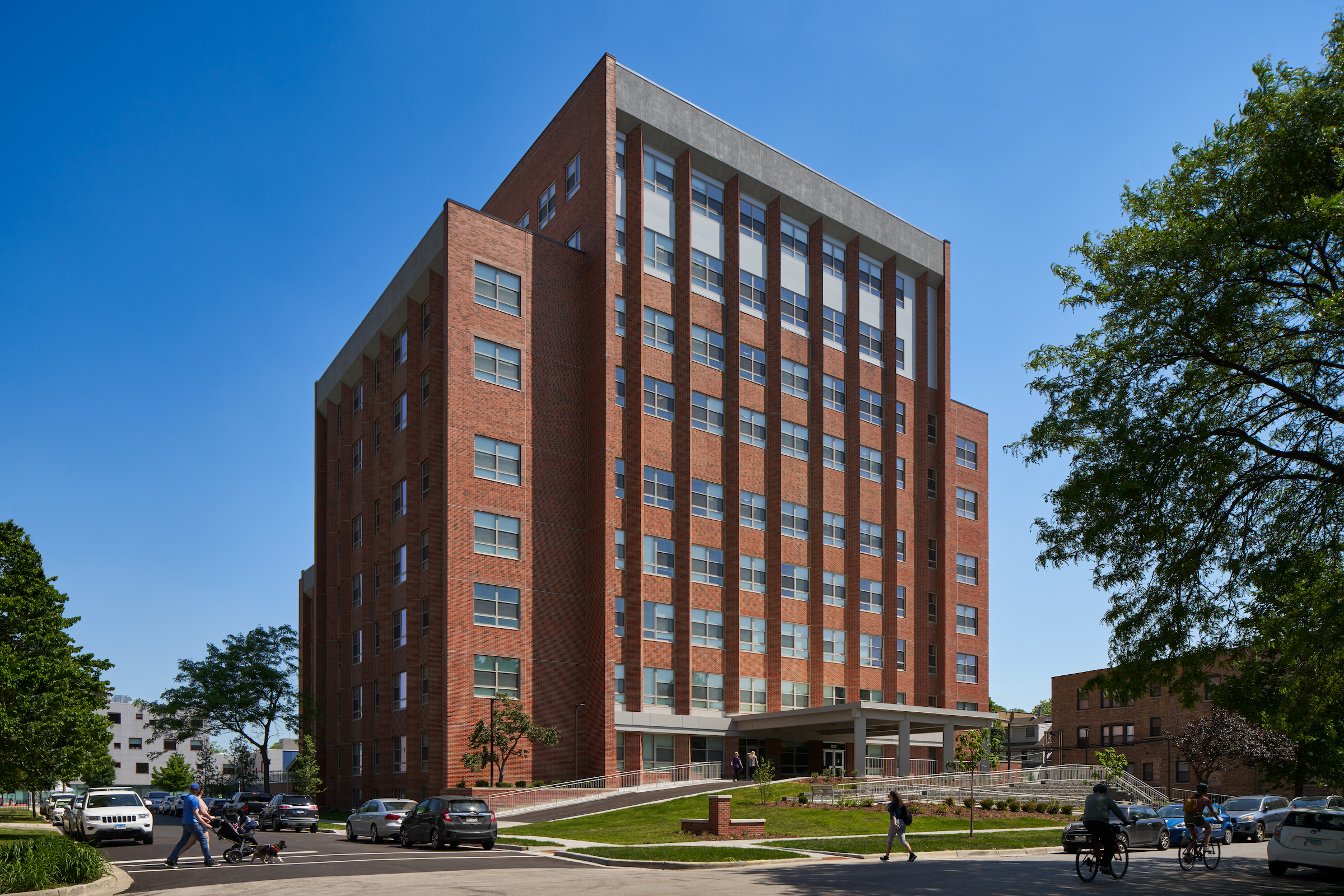
Embrace Living Communities, a nonprofit affordable senior housing provider founded in 1895, embarked on an ambitious multi-year initiative to comprehensively rehabilitate 12 buildings across the Chicago metropolitan area. This transformational project encompasses 934 apartments serving approximately 1,200 residents across 876,000 square feet, with a total construction value of $102.5 million. The portfolio rehabilitation represents more than a physical upgrade—it embodies Embrace Living’s mission to provide actively aging adults with affordable, welcoming homes in communities that truly embrace living. Each building renovation was guided by a fundamental question: “Will this benefit the residents?” This resident-centered approach drove every design decision, from major spatial reconfigurations to the smallest finish selections.
Project Goals and Vision
The rehabilitation initiative was driven by multiple, interconnected objectives that balanced immediate functional needs with long-term sustainability and resident wellbeing. The primary design goal centered on creating environments that actively support healthy aging and longevity—maximizing program area available for resident use, incorporating fitness facilities at each building, creating dedicated spaces for socialization and community meals, and enhancing outdoor spaces with health and wellness in mind. The design team prioritized increased light levels, reduced noise levels, and healthy indoor environments throughout.
The project was financed through 4% LIHTC funding through the Illinois Housing Development Authority (IHDA), with additional funding from refinancing and operating reserves. Beyond meeting IHDA requirements for rehab standards, accessibility, amenities, and universal design, the project required compliance with Enterprise Green Communities standards. A key operational goal was reducing energy and water consumption while prioritizing scope items beyond the capacity of maintenance staff to address.
To manage the complexity of renovating 12 distinct buildings simultaneously, the team developed standardized design approaches for both program areas and product specifications. However, these standards were intentionally flexible, allowing adaptation to each building’s unique physical constraints and community character. This balance between consistency and customization proved essential to the project’s success, while each building renovation highlighted Embrace Living’s brand identity and respected the unique character of individual communities.
Design Interventions
The comprehensive rehabilitation touched every aspect of the buildings, from major systems and building envelopes to community spaces, corridors, and individual dwelling units. The team conducted thorough assessments including physical condition needs assessments (PCNA), elevator reports, and masonry evaluations to inform scope decisions.
Community Spaces and Amenities

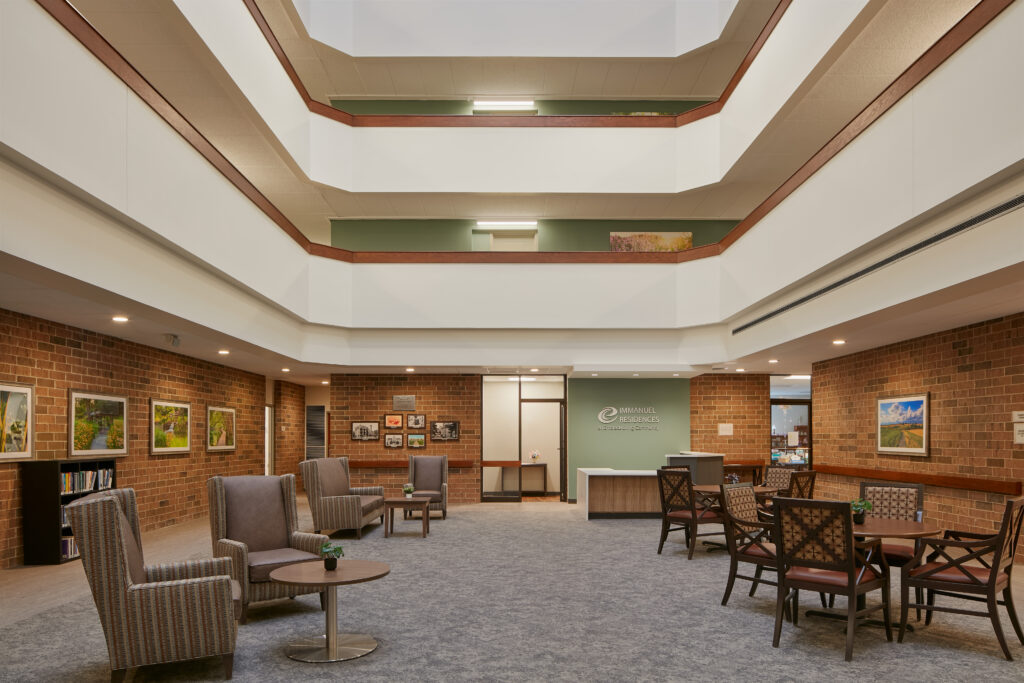
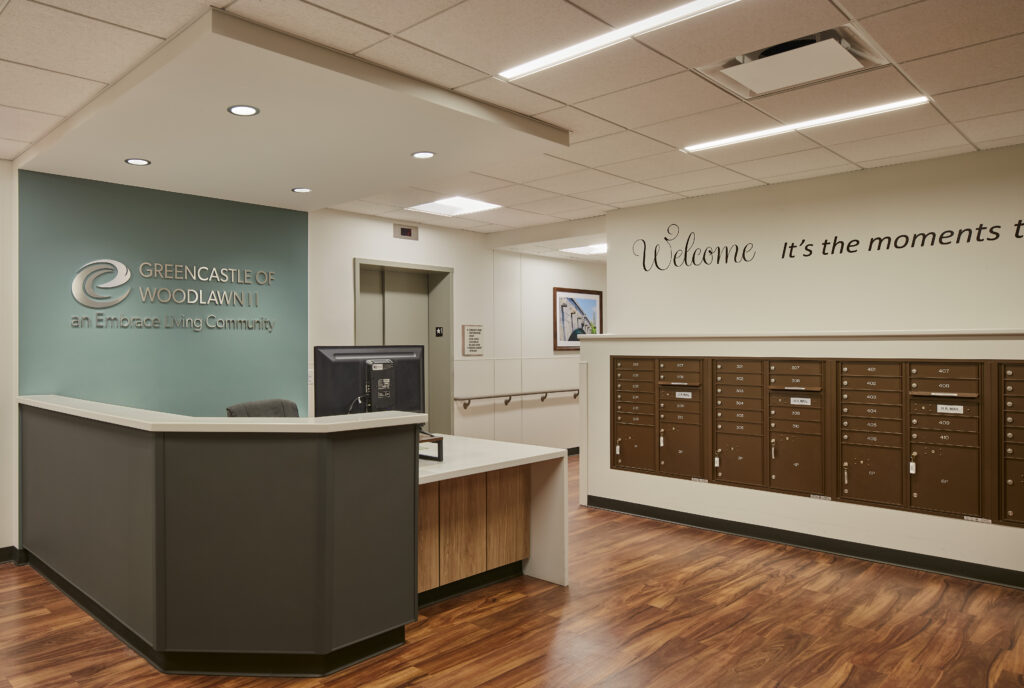
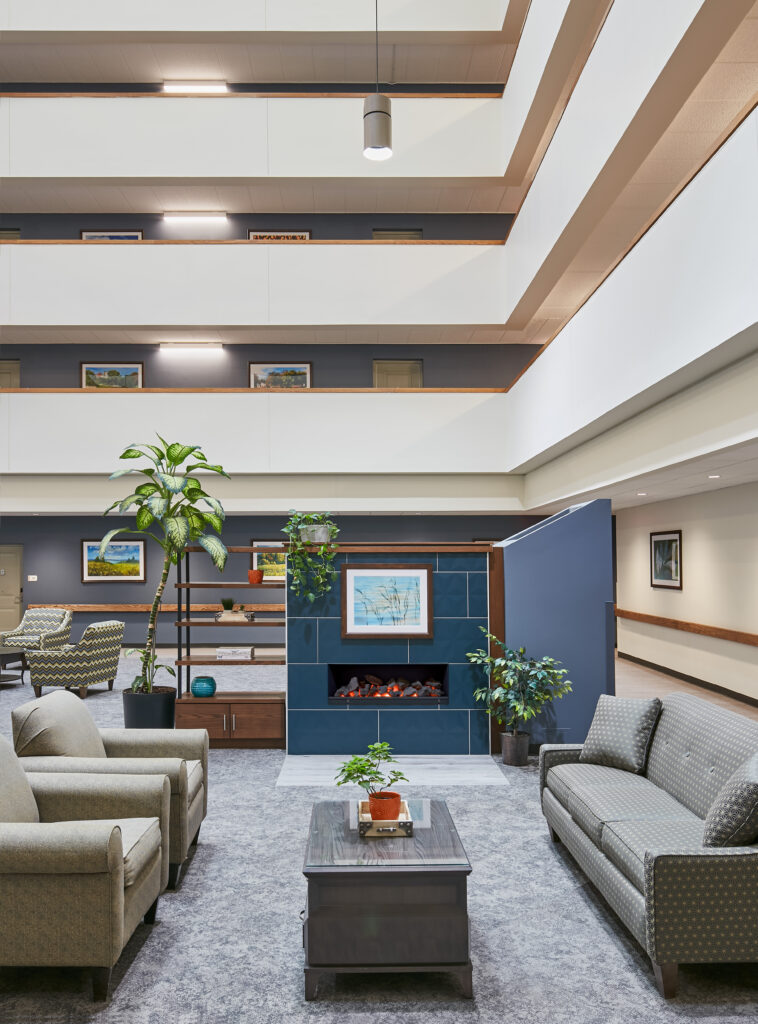
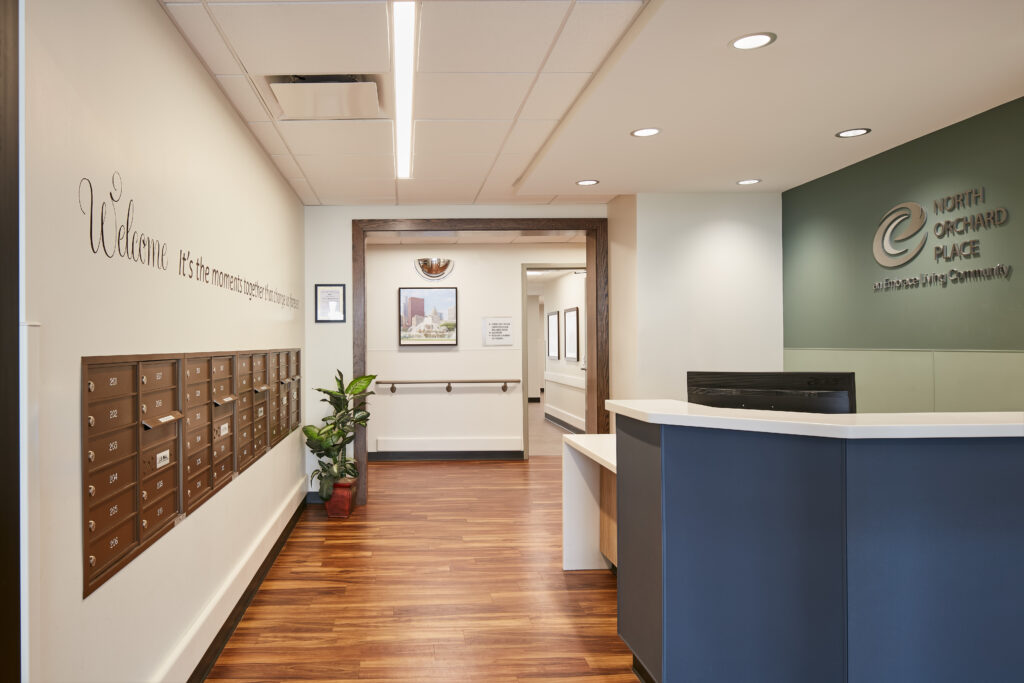
The renovation transformed first impressions at each building through redesigned reception areas and feature walls that established strong brand presence while creating welcoming, hospitality-inspired entries. Custom signage, thoughtfully integrated lighting, and carefully selected materials announce each building’s identity and set the tone for the resident experience, balancing functional requirements—secure staff workspaces, mail distribution, visitor management—with residential warmth and approachability.
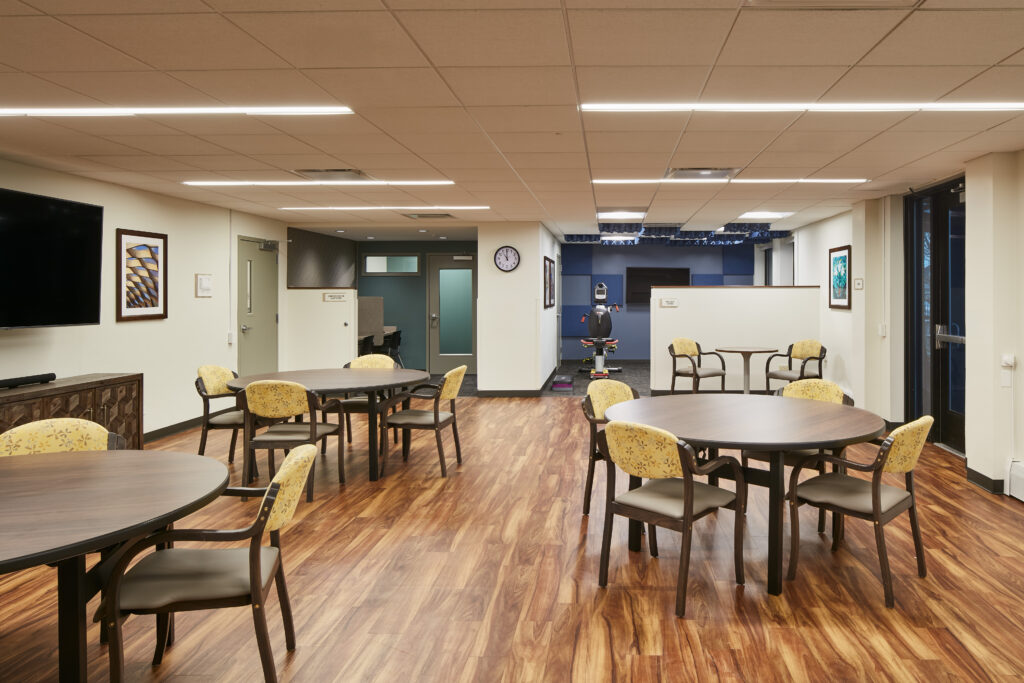
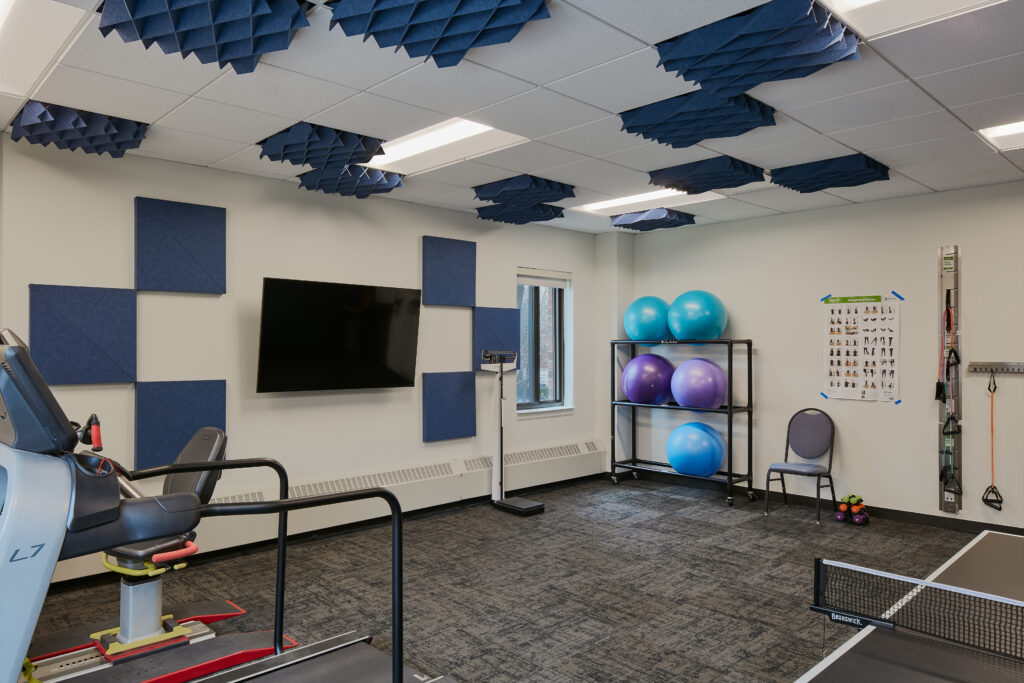
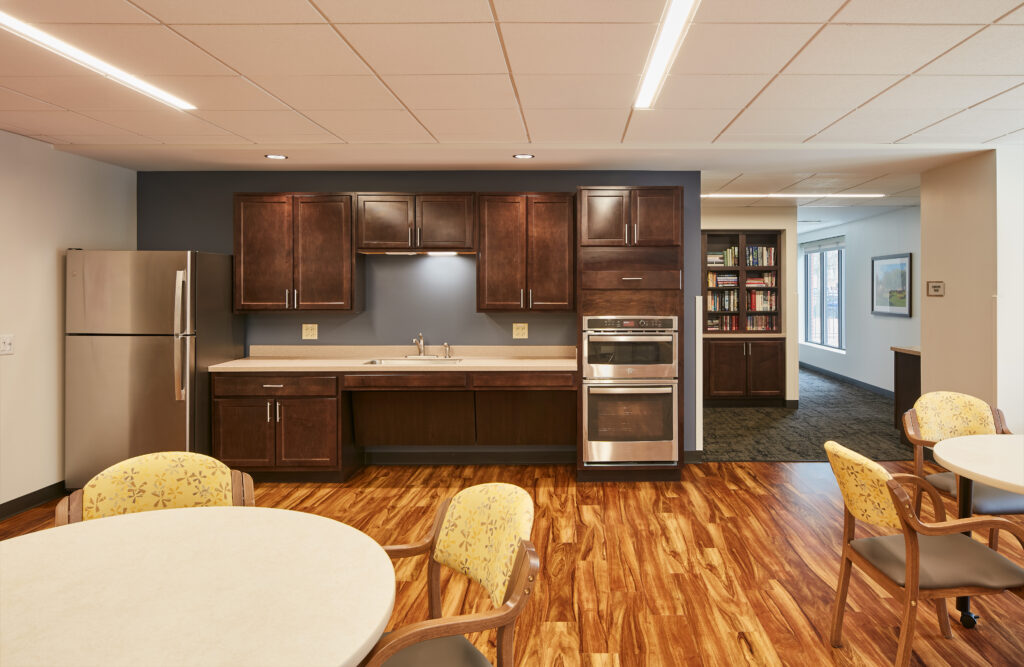
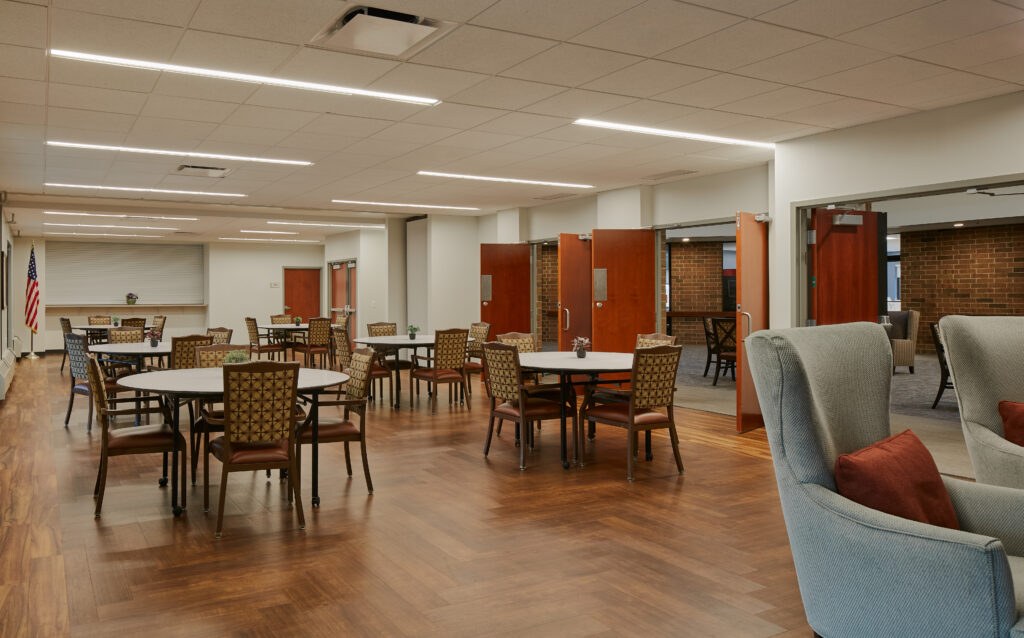
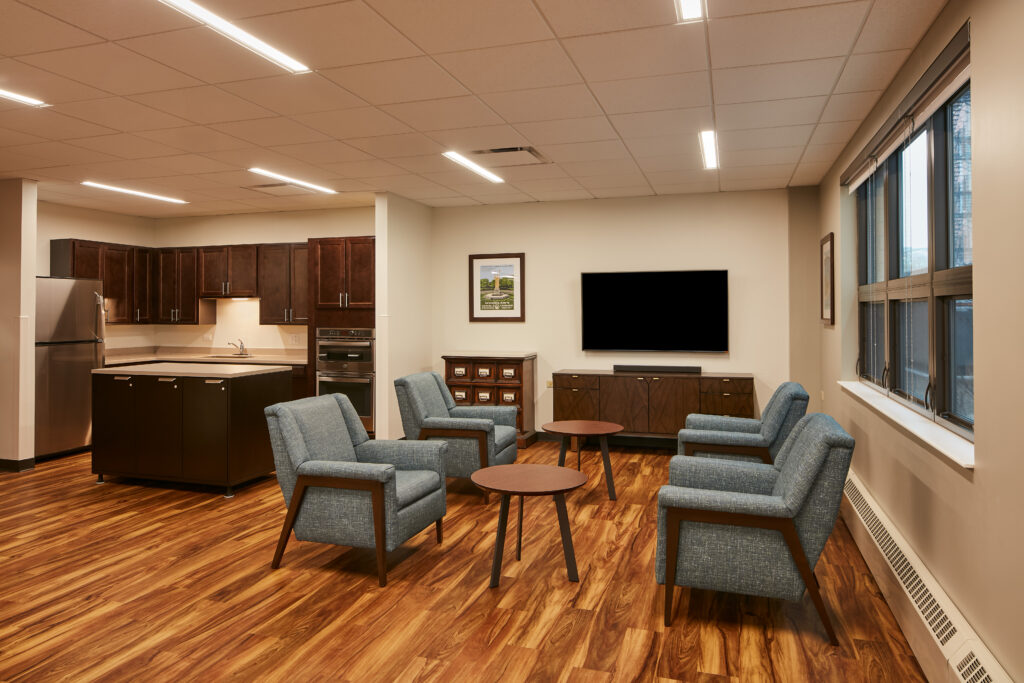
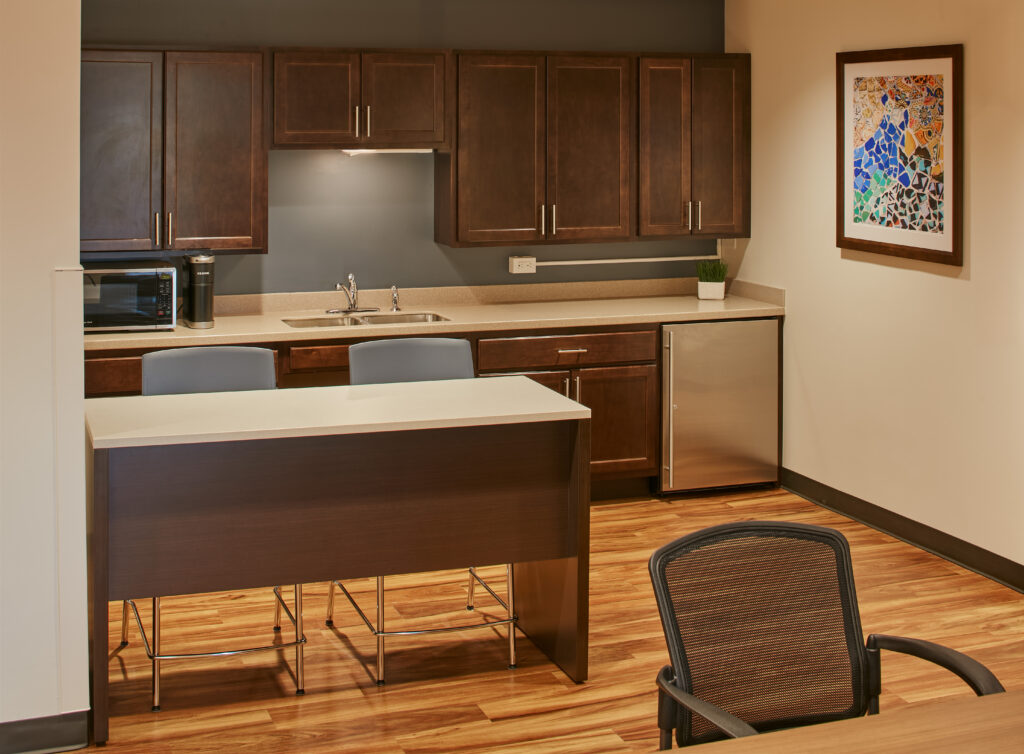
Each building received a dedicated fitness room or area equipped with age-appropriate exercise equipment, specialized flooring, acoustic treatments, and natural light to encourage regular use. Complementing the fitness areas, new or renovated library/computer areas provide quiet spaces for individual activities, while enhanced community rooms and dining areas support social connection and group programming. The design creates clear definition between different activity zones while maintaining visual connection and flexibility, with many buildings gaining dedicated game rooms, hobby spaces, and quiet alcoves that support diverse activities and preferences.


Recognizing the importance of mail distribution in daily life and community interaction, the design team created dedicated mail rooms with improved accessibility, visibility, and adjacency to primary circulation paths. Laundry room improvements included new equipment, finishes, lighting, and often spatial reorganization to improve efficiency and user experience, providing adequate space for sorting, folding, and waiting.


Interior Environments
Corridor renovations balanced code compliance, accessibility, aesthetics, and wayfinding. New finishes, lighting, artwork, and occasional alcoves with seating transform these utilitarian spaces into pleasant, identity-reinforcing experiences. Strategic use of color, texture, and imagery helps residents navigate while creating variety and visual interest, with attention to lighting levels and quality significantly improving safety and comfort.
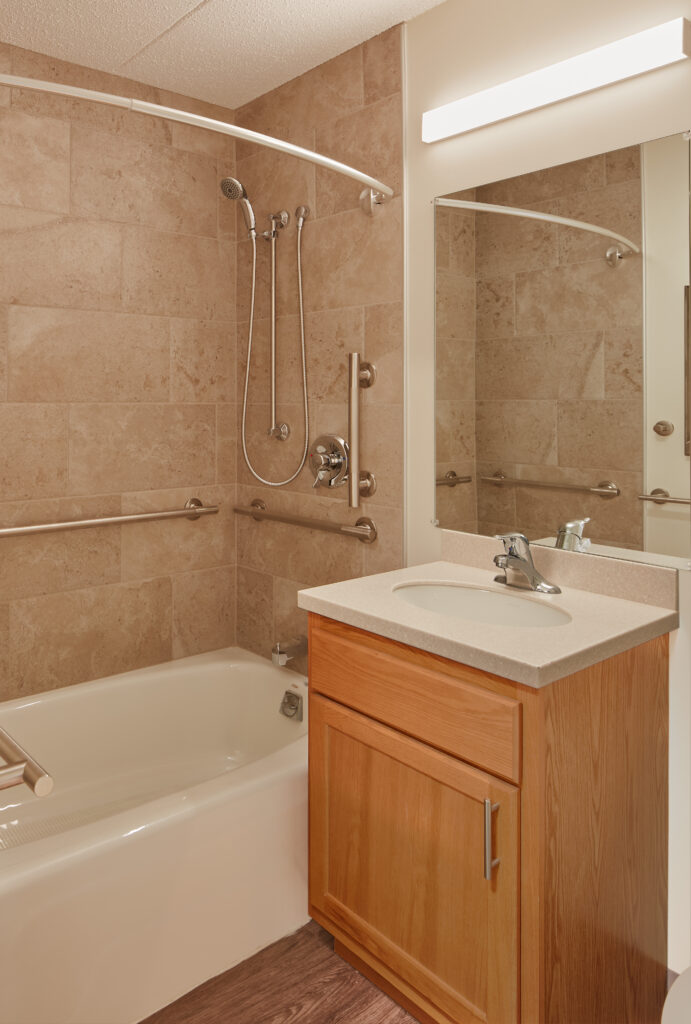
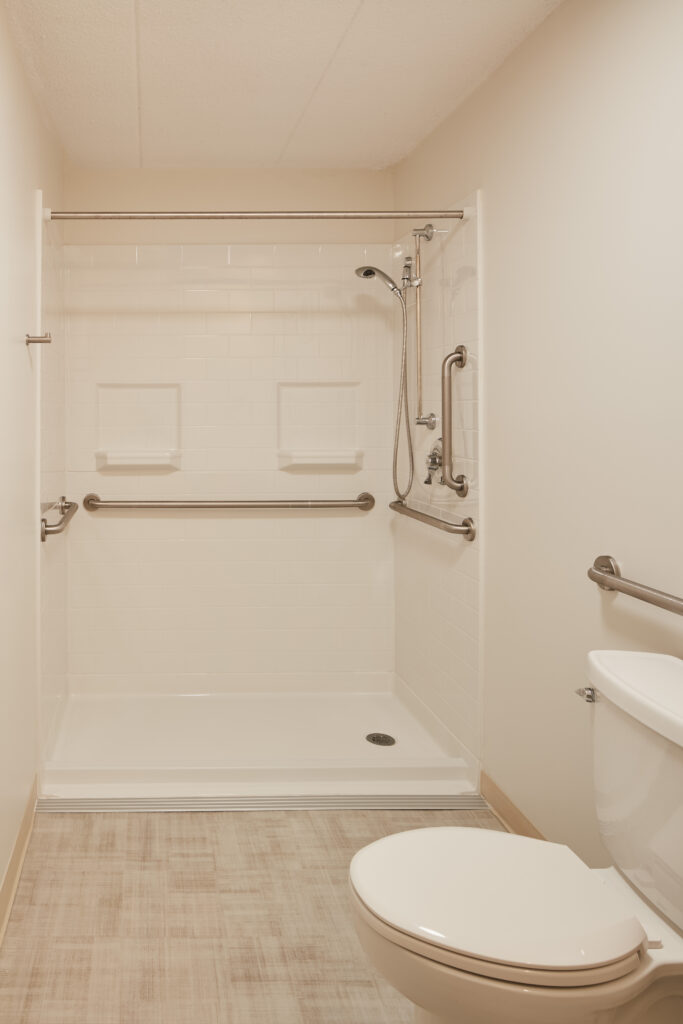
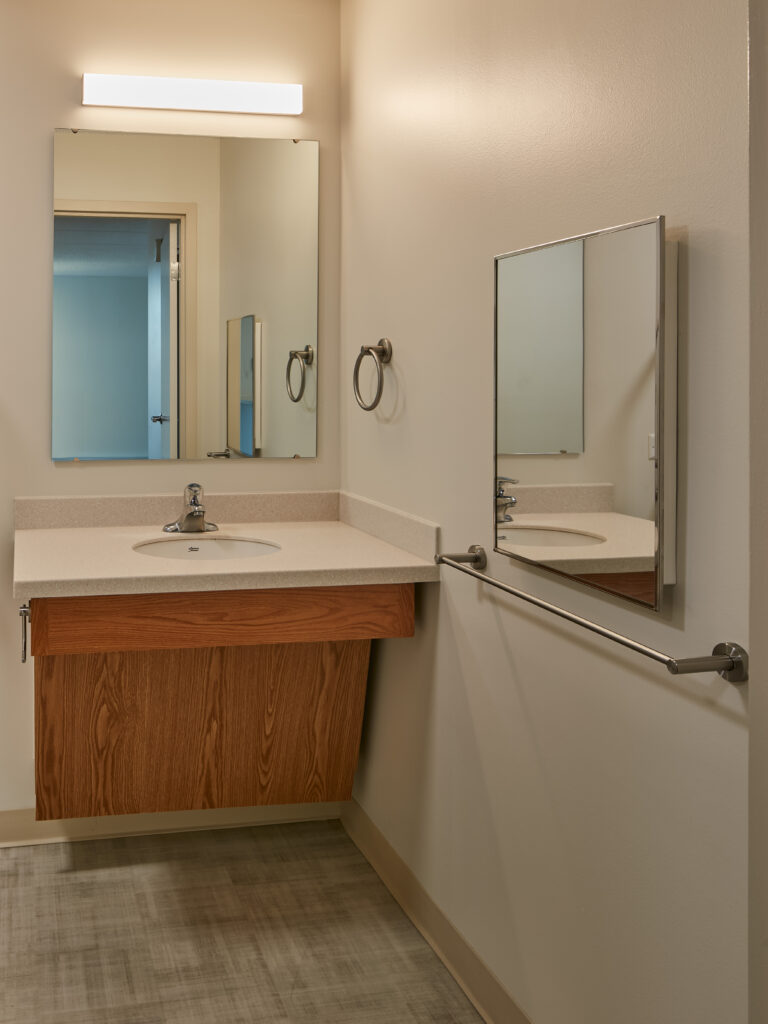
Dwelling unit improvements focused particularly on bathroom accessibility and safety. The majority of units received new bathroom fixtures, grab bars, improved lighting, and slip-resistant flooring, with many bathrooms reconfigured to improve clearances and accessibility. Units also received new kitchen finishes and fixtures, flooring, lighting, and in many cases, new appliances. The design approach creates a fresh, contemporary, and maintainable living environment while respecting the modest scale and character appropriate to affordable housing.


Site and Outdoor Improvements
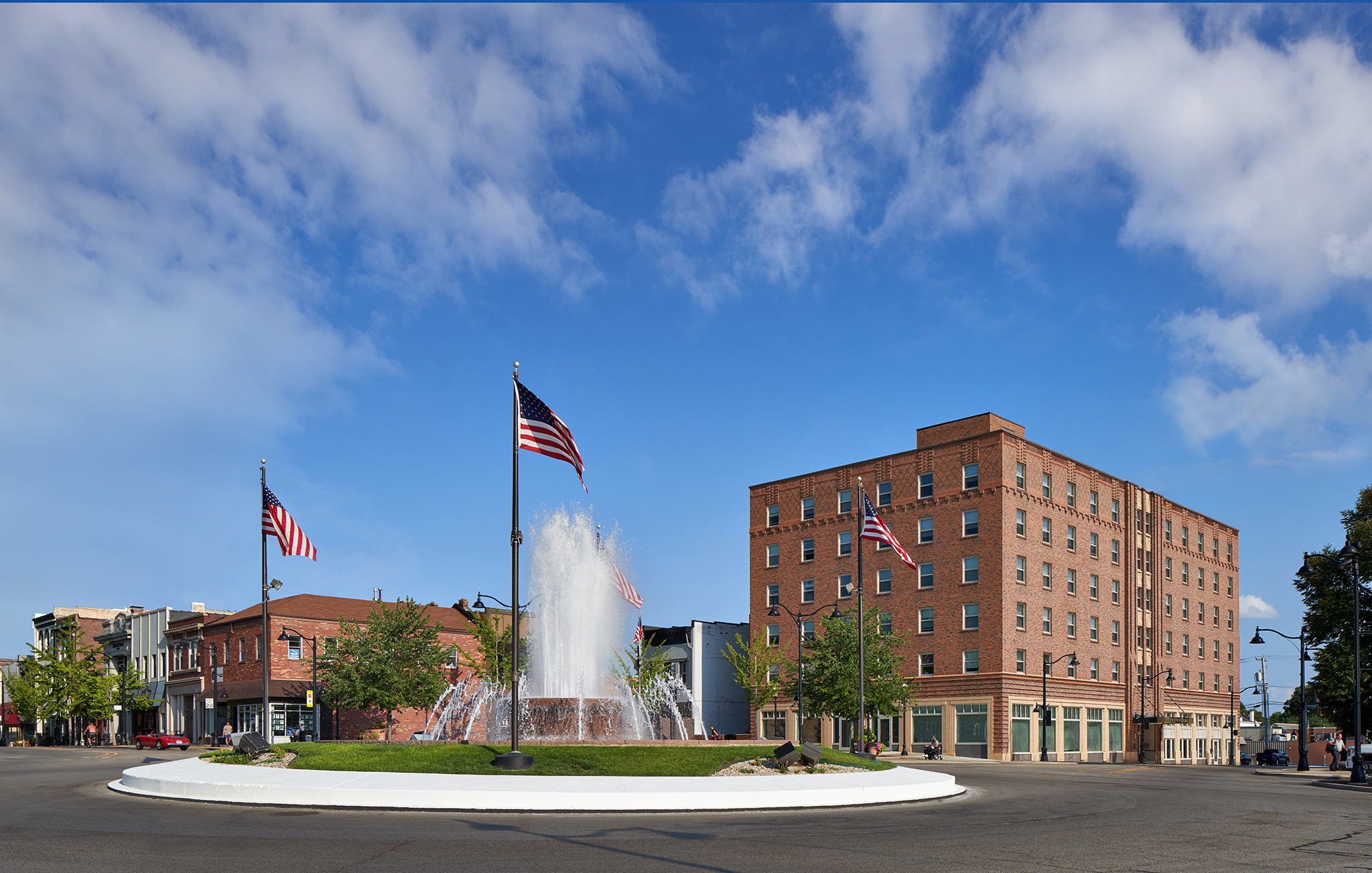
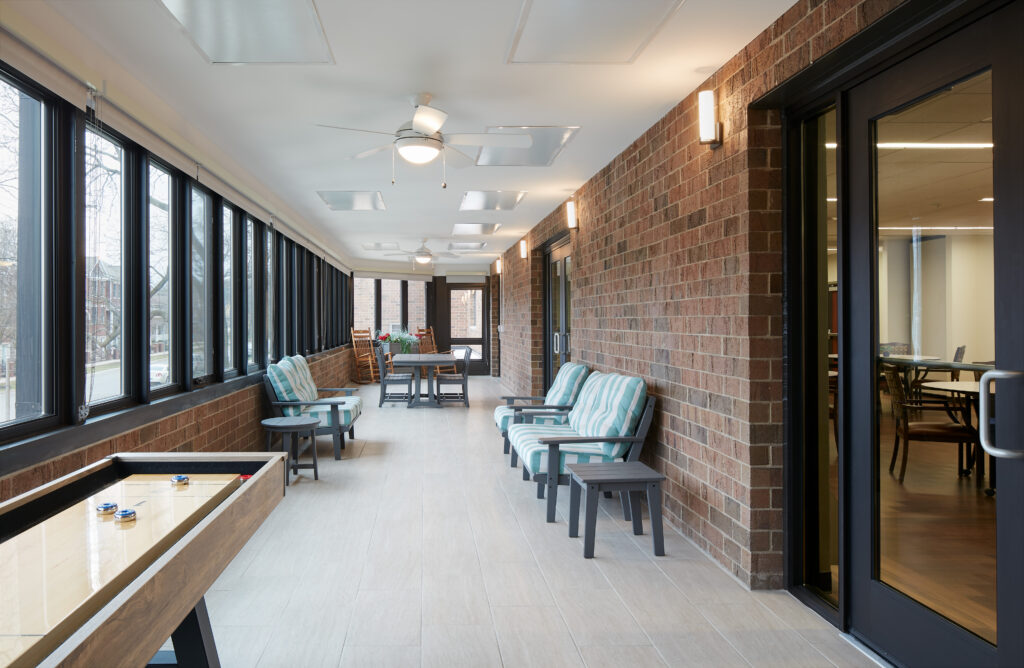
Exterior improvements varied by site but frequently included new or enhanced outdoor gathering spaces, walking paths, landscaping, and site furnishings. These interventions create opportunities for outdoor activity, social interaction, and connection to nature—all important contributors to healthy aging. Careful attention to accessibility, shade, seating, and maintenance requirements ensures these spaces remain well-used and sustainable.
Furniture, Fixtures, and Artwork
A comprehensive FF&E program provided coordinated furniture selections for all common areas, prioritizing ease of ingress and egress for senior users, cleanability to address incontinence and bed bug concerns, flexibility for reconfiguration during special events, and long-term durability over initial cost. Upholstery selections enhance the architect's interior palette while meeting rigorous performance requirements, creating a recognizable Embrace Living aesthetic across buildings while allowing for variation to suit each space.
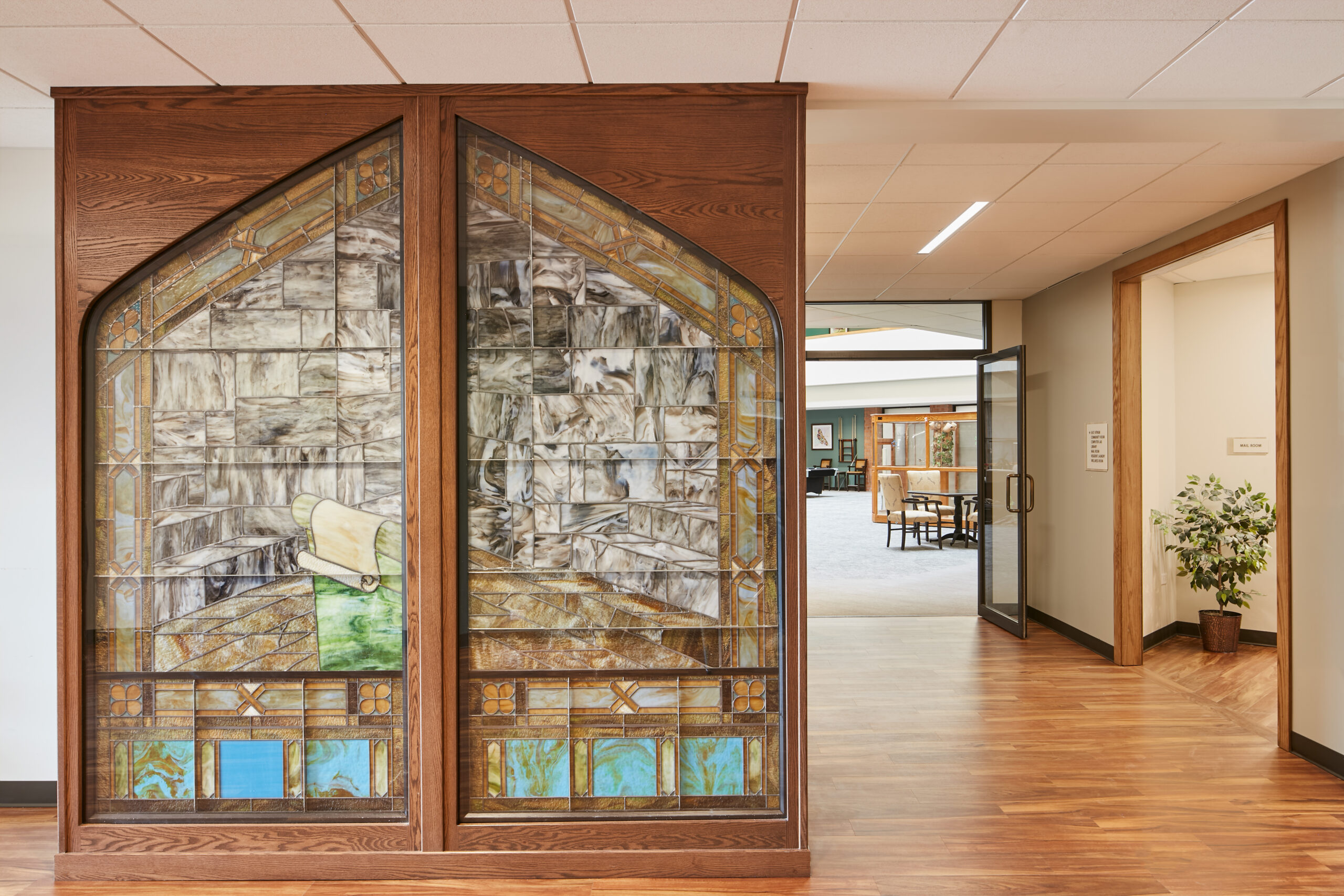
Custom artwork programs were developed for each building, reflecting local history, culture, and landscape. The artwork serves multiple functions: creating beauty and interest, supporting wayfinding through strategic use of color and content, and connecting residents to their community context. History walls at several buildings celebrate neighborhood heritage, while the artwork complements architectural finishes and furniture selections while adding layers of meaning and identity.

Implementation and Impact
The scale and complexity of renovating 12 occupied buildings simultaneously demanded exceptional coordination, communication, and adaptive problem-solving. Project success depended on selecting experienced partners and cultivating trust-based relationships. The owner assembled a core team including WJW Architects, Strong Design Consultants for interior design and FF&E, and Stenstrom as general contractor—all firms with deep experience in affordable housing rehabilitation and LIHTC compliance. Weekly or bi-weekly whole-team meetings during the design process ensured alignment and rapid problem-solving, while maintaining consistent team members across all 12 buildings created efficiency and institutional knowledge.
Successful implementation required involving diverse stakeholders throughout the process—finance staff, operations managers, maintenance teams, property managers, and social service coordinators. The construction approach implemented a strategic sequence that minimized disruption, with unit renovations proceeding in batches of maximum 10 units on two-week intervals. This rhythm allowed the team to work out procedures while maintaining steady progress, with building managers at each property playing crucial roles in coordinating with residents and managing logistics.
Minimizing disruption to residents—many of whom are elderly and on fixed incomes—was paramount. The team provided food credits, clear communication about schedules and expectations, and consistent support resources to build trust and cooperation throughout the lengthy renovation process. Despite comprehensive planning and standardization, the team remained prepared to adapt, using mock-ups to validate selections and adjusting standards based on staff and resident feedback.
Project Significance
The comprehensive rehabilitation of Embrace Living Communities' portfolio demonstrates that affordable senior housing can and should be beautiful, healthy, and dignified. The transformation goes far beyond cosmetic updates to fundamentally reimagine how these buildings support resident wellbeing and longevity.
Every building now offers dedicated fitness facilities, expanded social spaces, improved outdoor areas, better lighting and acoustics, and healthier indoor environments—supporting physical activity, social connection, cognitive engagement, and overall quality of life. The renovation celebrates both the Embrace Living Communities brand and the unique character of each building and neighborhood, with residents experiencing enhanced pride of place, stronger sense of community, and deeper connection to their surroundings.

Standardized approaches, improved systems, and enhanced staff facilities support more efficient operations, while energy and water consumption reductions lower operating costs. The buildings are better positioned for long-term sustainability and continued service to their communities. Perhaps most importantly, residents experience daily life in more beautiful, comfortable, and supportive environments that acknowledge their dignity and worth.
This portfolio-wide rehabilitation represents a significant investment in both physical infrastructure and human dignity. By maintaining unwavering focus on resident benefit, assembling a skilled and trustworthy team, developing thoughtful standards with built-in flexibility, and remaining adaptable throughout implementation, Embrace Living Communities has transformed 12 buildings into healthier, more beautiful, and more sustainable homes for older adults of modest means—demonstrating that comprehensive rehabilitation of aging affordable housing is both feasible and essential, and that thoughtful design can significantly enhance quality of life for all people, regardless of income.
Related News
Project Spotlight: Embrace Living Communities
Renovations for senior wellbeing
Heidi Presents at Environments for Aging Conference
Highlights from Lexington